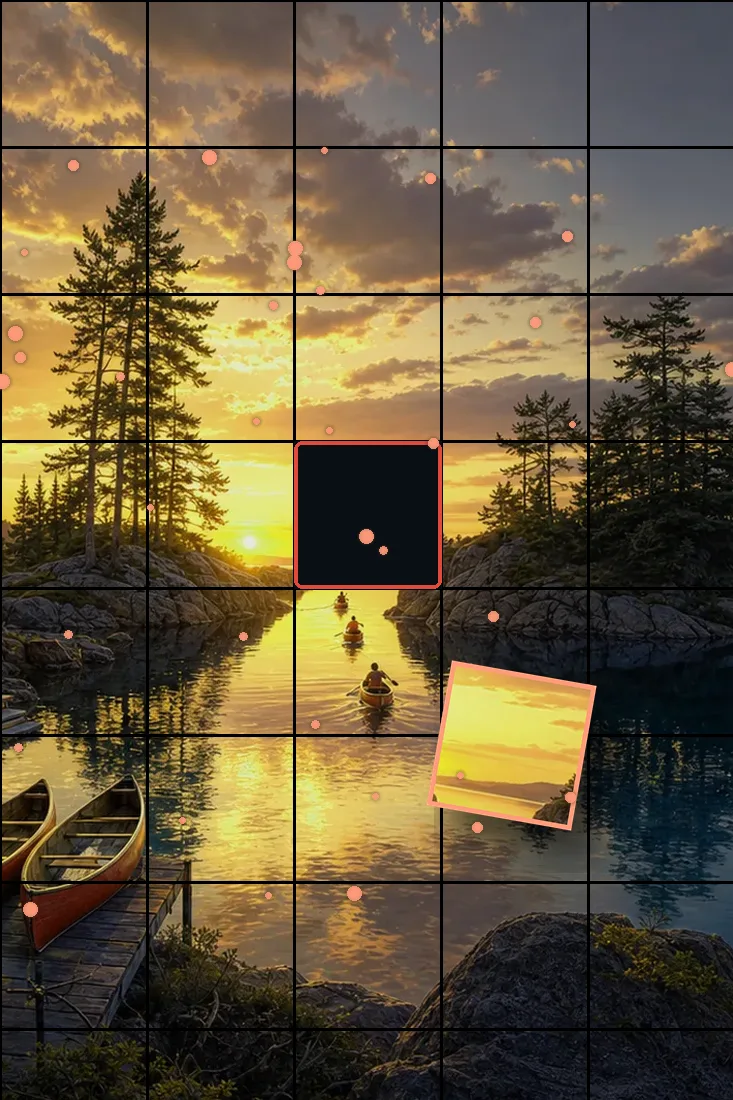
Every game at the lodge rewards a particular kind of looking. This handbook shares the habits that help us most, from nonogram logic to banking a putt.
Look before you touch
The single most useful habit across all six games is a short pause before your first move. On the putting course, that means looking at the whole hole, not just the cup. In a picture grid, it means scanning every clue to find the biggest. In a word hunt, it means reading the whole list once before you start searching. Five seconds of looking saves a minute of fumbling.
We noticed this while watching testers. The players who scored best were rarely the fastest at the start. They were the ones who took a breath, read the situation and then acted with purpose. It sounds obvious, yet nearly everyone rushes the first move of a new game, and that first move often sets the tone for everything after it.
So make the pause a ritual. Rest your hand, glance around the board, and only then begin. It works whether you are on a train, at the kitchen table or tucked under a plaid blanket at a cottage, and it turns every game at the lodge from a flurry of reactions into a series of small, considered decisions.
Picture grids, one certainty at a time
Birchbark Grids rewards a very particular mindset: only write down what you can prove. The overlap method is the first tool. If a row of ten has a clue of 7, slide that run as far left as it goes, then as far right. The cells covered in both positions must be filled. Do this on every big clue before anything else.
Next, use the edges. If a filled cell touches the border, the run it belongs to has to start there, so you know exactly how far it extends. Cross out the cell just beyond it. Then look at the columns those new marks touch, because each certainty you add tends to unlock a neighbouring line. Progress spreads across the grid like ripples from a dropped pebble.
Finally, trust your crosses. Beginners often skip marking empty cells, but those crosses do half the work on larger 15x15 grids. When you stall, scan for any line where the remaining open cells exactly match the clue. There is almost always one, and finding it gets the whole puzzle moving again.
Word hunts and the art of not reading
It sounds strange, but the best way to find words in Dockside Word Hunt is to stop reading the grid like a page. Your eyes want to move left to right, line by line, and that hides every word running backwards or diagonally. Instead, pick one letter and look at all eight neighbours around each copy of it.
Start with rare letters. A Q, a Z, a K or a double letter like the two Ls in mallard leaps out of a grid of common vowels. Long words are easier to spot than short ones, because they cross more of the board, so clear them first and leave three-letter words like fog and map for the end, when fewer letters are left to confuse you.
Hints are best saved for the final stubborn word. Each one adds a little to the time used for your stars, so spending them early can cost you a third star you would otherwise have earned. And try the morning paddle pack each day; it is a pleasant little routine and the same puzzle for everyone, from Victoria to St. John’s.
Putting angles and the gentle touch
Portage Putt follows honest physics, which means it can be learned. The most useful idea is that a ball leaves a wall at the same angle it arrives. If the cup sits around a corner, imagine the hole reflected on the other side of the wall and aim at that imaginary spot. The ball will bank off and roll towards the real cup.
Power matters as much as direction. A ball that arrives too fast can rattle off the edges of a cup and keep going, while a softer putt that dies beside the hole is almost always an easy tap-in next time. When in doubt, choose less power. Sand slows the ball sharply, so add a little extra strength for any putt that has to cross it.
For moving gates, the trick is patience. Watch the gate make a full trip before you putt, count its rhythm, and send the ball so it arrives just as the gap opens. Slopes bend the ball gradually, so aim slightly uphill of where you want it to finish. After a few rounds, these adjustments start to happen without thinking.
Keeping calm when the game speeds up
Two of our games, Ember Dock Breaker and Lily Wake Trail, get quicker as you do well. That is part of the fun, but it can tip you into tense, jerky play. The answer is the same in both: think a move ahead. In the breaker, decide where you want the ember to go before it reaches the paddle. In the trail game, plan your next two turns, not just the next one.
Space is your friend. In Lily Wake Trail, sweeping loops along the edges keep open water in the middle for when your trail is long. In the breaker, clearing a channel to the top row lets the ember bounce along the ceiling and do the work for you. Both strategies swap frantic reactions for calm, deliberate control.
And remember you can always step away. The breaker pauses with P or Escape and pauses itself if you switch tabs. A short break, a stretch or a sip of something warm resets twitchy thumbs better than another rushed attempt. The lodge will be right where you left it.